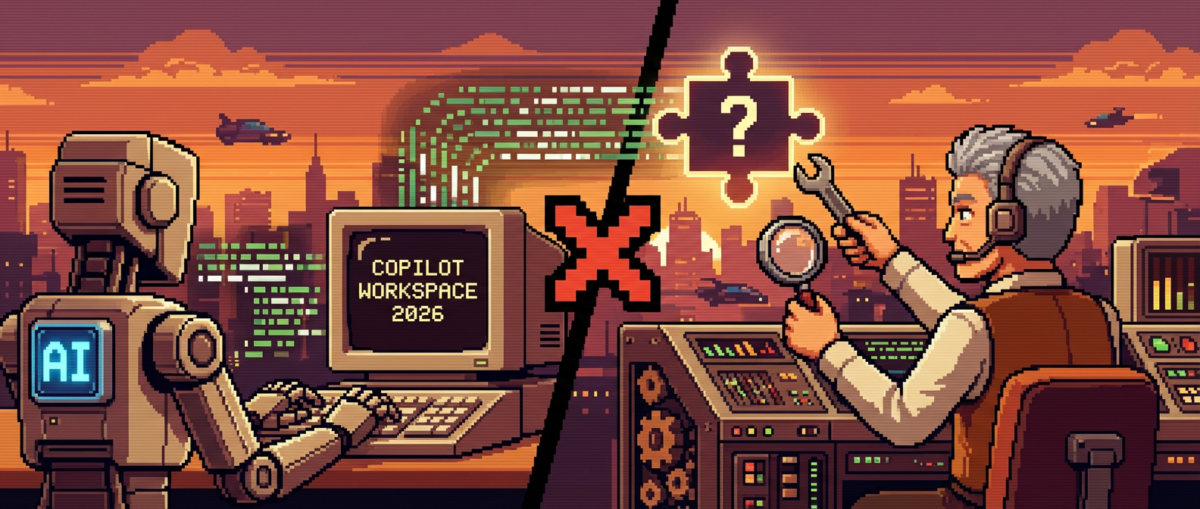
The Promise That Landed in November 2025
Last fall, GitHub released Copilot Workspace to general availability, and the industry held its breath. Here was a tool that promised something genuinely novel: end-to-end task completion without ever leaving your browser. Issue to pull request. One window. No context switching. Within six months, 1.8 million developers had activated it, which tells you something about the hunger for this kind of integration. I installed it on day one because I’ve learned that dismissing new tools reflexively is how you become the engineer at the coffee table complaining about how things used to work.
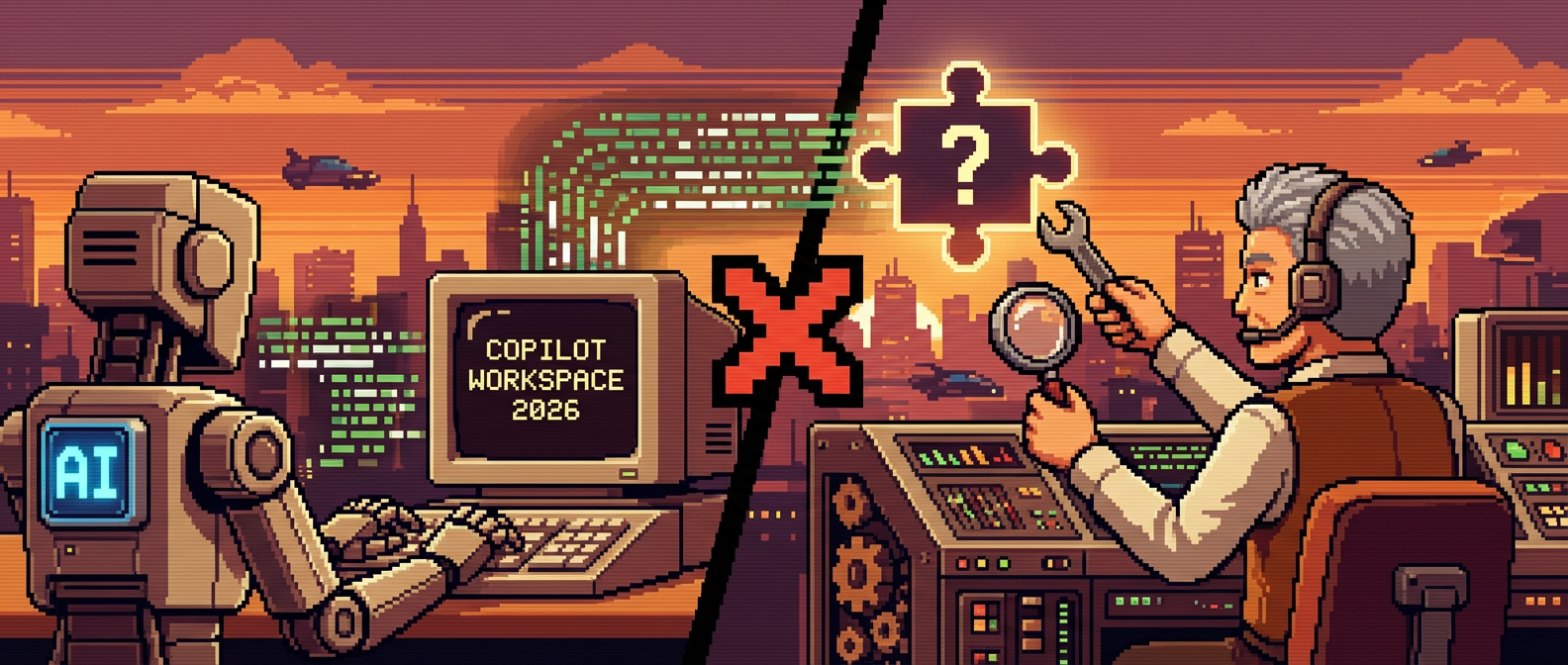
The interface is genuinely slick. You paste in a GitHub issue, Copilot Workspace ingests your codebase context, and it generates not just code but entire sequences of changes with accompanying reasoning. It’s the kind of thing that makes you nod and think, “Okay, this might actually change the workflow.” The marketing materials certainly suggested it would. When you can watch AI scaffold out a multi-file feature in under a minute, writing code by hand starts to feel almost quaint.

What the Data Actually Says About AI Code Quality
I started using Copilot Workspace on real work almost immediately, and I noticed something familiar happening. The code looked correct. It compiled. Tests passed on the first try maybe 60 percent of the time. But something else was happening in my repositories that I couldn’t ignore. According to a Stack Overflow survey from late 2025, 76 percent of developers using AI coding tools reported spending significant amounts of time fixing logic errors in production-adjacent code. That’s not a small friction cost. That’s a whole category of work that simply didn’t exist at this scale before.
Then I read the GitClear 2025 AI Code Quality Report, and it crystallized something I’d been observing anecdotally. AI-assisted codebases were showing a 41 percent increase in code churn rates compared to pre-AI baselines. More rewriting of recently committed code. More thrashing. More commits that undo or substantially refactor what was committed weeks earlier. In a small codebase, that’s a curiosity. In production systems, that’s a problem wearing a productivity disguise.
The Thing About Domain Knowledge and Architectural Judgment
Here’s where I want to be careful not to sound like the old guard just protecting territory. Copilot Workspace is genuinely useful for certain categories of work. Boilerplate. Straightforward CRUD operations. Tests. The kind of code you could write in your sleep but would rather not. I use it for that. But the moment you enter territory where the decision matters, where you’re making a trade-off between performance and maintainability, the tool becomes less helpful than a junior engineer who actually understands the system.
Consider a decision I made recently in a codebase I’ve maintained for seven years. We had accumulated technical debt in our database query layer. An AI tool could generate clean code to refactor that, even generate multiple approaches. But it couldn’t understand why we’d made the original choices, why certain patterns existed in this codebase and not others, why our infrastructure constraints meant a solution that works beautifully in isolation might create cascading problems here. That knowledge lives in my brain, in pull request comments from 2019, in conversations with departed team members about decisions we never wrote down. Copilot Workspace has no access to that. It has the structure of the code, not the reasoning behind it.
The Competitive Pressure Is Real, But So Are the Limits
The landscape shifted again in February 2026 when Anthropic released Claude 3.7 Sonnet with extended thinking mode. The benchmarks were hard to ignore. It resolved 70.3 percent of problems on SWE-bench Verified, which is the kind of score that makes other vendors nervous. The technology is improving genuinely and measurably. But here’s what extended thinking mode does: it lets the model spend more tokens working through a problem before generating code. It’s more careful. And yet, even with more capable foundation models, GitHub Copilot Workspace documentation still shows the same friction points in real-world deployment that I keep running into.
The gap between capability and judgment isn’t closing because they’re not the same thing. Capability is about writing code that works in isolation. Judgment is about understanding when code is the right solution, how it fits into a system, what will break when you touch this particular thread, whether a shortcut now creates debt that compounds for years. A senior engineer develops judgment through repetition, failure, recovery, and reflection. A language model develops capability through scale and data. These aren’t converging. They’re orthogonal skills that happen to both be necessary in software development.
What This Means for How We Actually Work
I’m not arguing against using these tools. Copilot Workspace has saved me hours on grunt work. I’m also not arguing that senior engineers are irreplaceable geniuses. The point is that the role of the senior engineer is shifting, not disappearing. Instead of writing every line of code, we’re increasingly doing something closer to architecture, review, and system-level decision-making. We’re learning to use AI effectively while maintaining real skepticism about its outputs. We’re catching the 24 percent of AI code that works but shouldn’t, the architectural decisions that make local sense but create global chaos.
The developers who will thrive here are the ones who stay uncomfortable, who use these tools enthusiastically but question them relentlessly, who understand that 1.8 million active users doesn’t mean the job is done. It means there’s a new category of work that didn’t exist before. Code review has become code archaeology. We’re excavating the reasoning behind AI suggestions and asking hard questions. That’s not a step down from our previous role. It’s a shift toward work that’s harder to commoditize and more valuable precisely because it requires judgment.
What’s your experience been? Are you seeing code churn in your repositories? What categories of work have you handed off to Copilot Workspace that you genuinely miss not writing yourself, if any? I’m curious whether this resonates or whether I’m just experiencing the particular blindness of working at a certain scale and age in my career.
